
This Portfolio
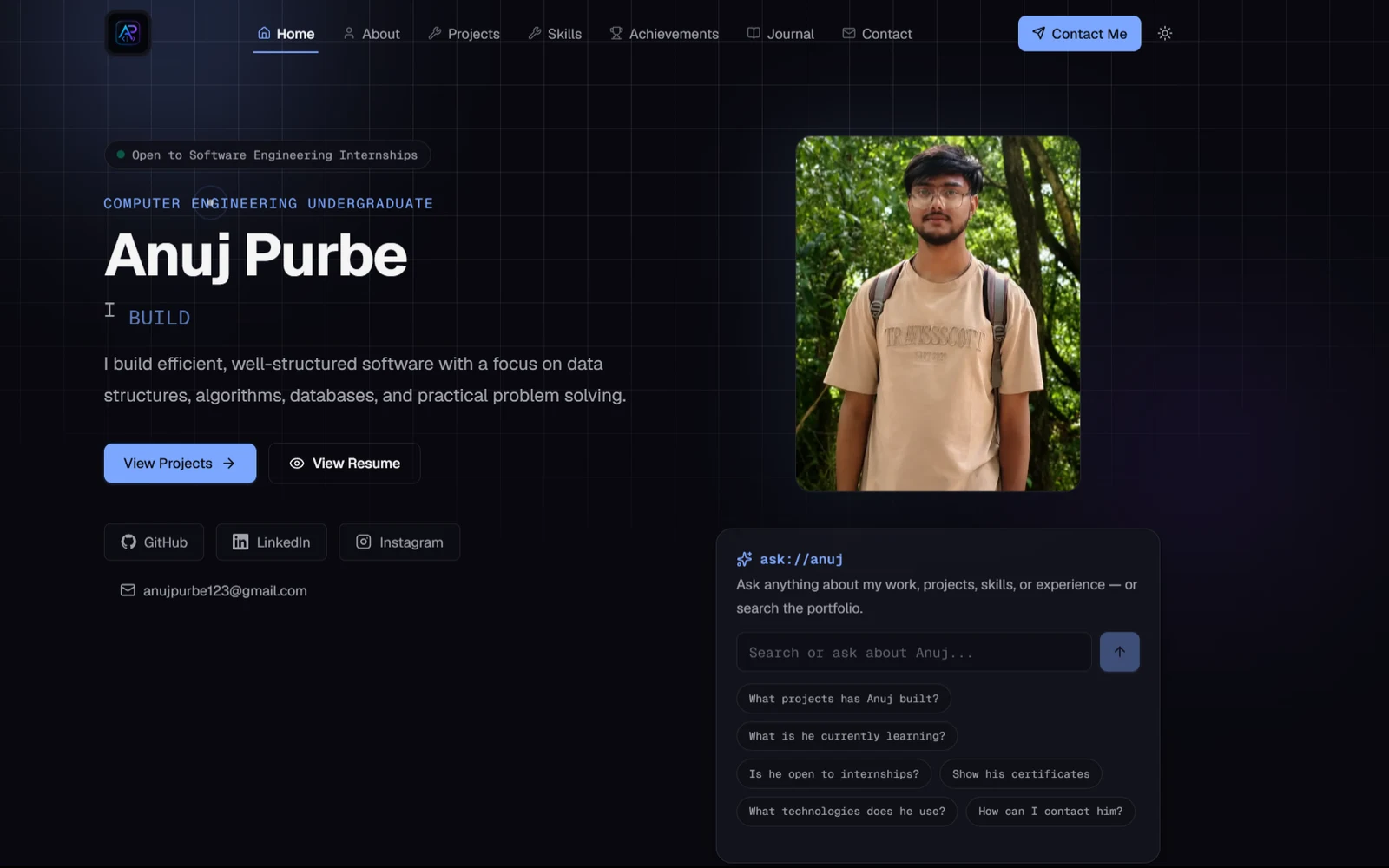
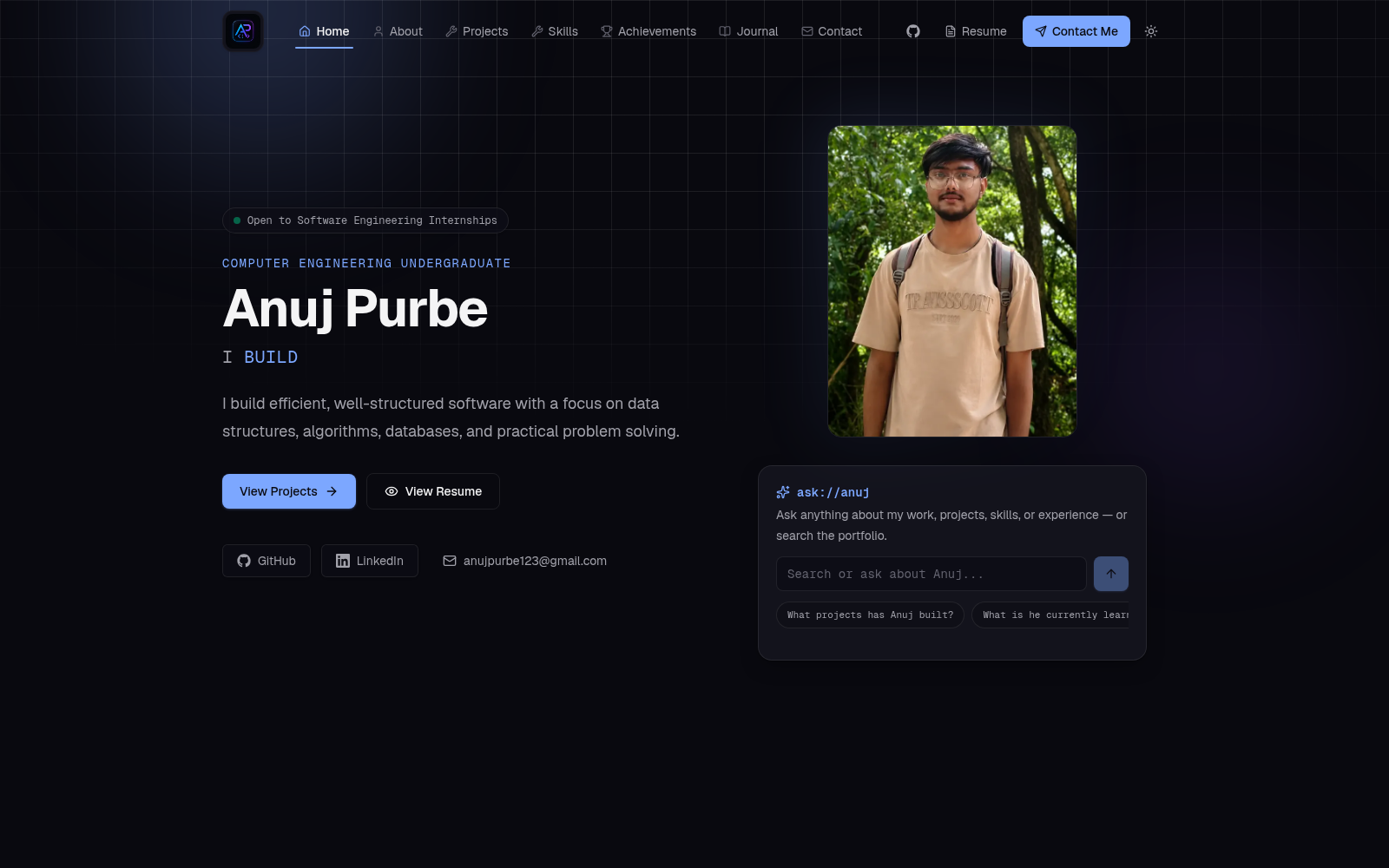
The site you're on — a premium, animated engineering portfolio built in public: Next.js, TypeScript, Tailwind CSS v4, Motion, with live GitHub/LeetCode data, a dated journal, and moderated comments.
- Role ·
- Solo — design, build, content, and deployment
- Timeline ·
- Aug 2026 – present (actively maintained)
Screenshots
Status
Actively maintained — new sections and journal entries ship regularly.
The problem
Wanted a portfolio that demonstrated engineering thinking, not just a list of finished projects — a site where the interactive elements themselves prove the underlying skills (DSA, database design) instead of just describing them.
The approach
Data-driven sections built from a centralized content model, live GitHub/LeetCode stats with honest fallbacks when the APIs are unavailable, a dated journal documenting decisions and lessons as they happen, and a moderated comments section backed by Supabase.
Stack & why
- Next.js + TypeScript — file-based routing for project/journal pages plus type safety across the content model
- Tailwind CSS v4 — fast iteration on visual design without a separate CSS architecture
- Motion — the animation library driving the count-up stats and ring interactions
- Supabase — backing the comments system and admin moderation panel
Architecture
App Router + RSC sections, server-side data fetching with caching, Supabase-backed contact/comments with graceful degradation, and Motion for animation — all reduced-motion aware.
Trickiest parts
Fighting Vercel's static-build misdetection that shipped only /public — every route returned 404.
How I solved them
Pinned the project's framework to Next.js via the Vercel API and re-verified every route end to end.
Results
A production portfolio live at anuj-purbe-portfolio.vercel.app, all routes returning 200.
What I learned
Deployment config is part of the code — verify what actually shipped, not just what built.